
For more information about any of our products or services,
please provide the information below and one of our experts will call you back shortly.
For more information about any of our products or services,
please provide the information below and one of our experts will call you back shortly.
Welding practices produce smoke, dust and fumes that are highly toxic when inhaled. As metal is heated above boiling point during arc welding and other welding operations, it creates vapors that condense into very fine, solid particulate. These microscopic particles can easily pass through the nasal cavities and into the lungs, increasing exposure to welding fume damaging worker health.
The resulting health conditions vary and depend on the following factors:
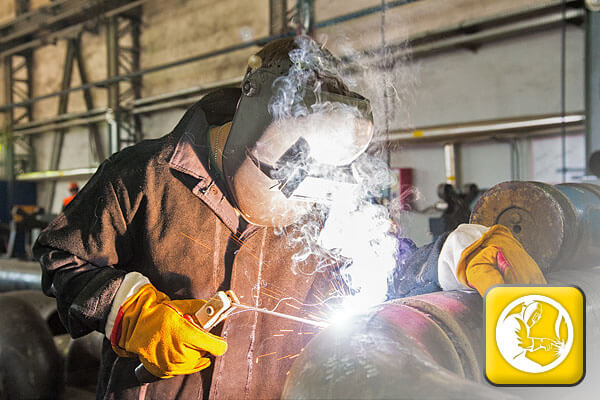
Composed of a mixture of metallic oxides, silicates and fluorides, weld fumes change based on the type of metal, coatings, shielding gases, and airborne contaminants like degreasers and cleansers. Fume generated during welding galvanized steels is especially dangerous due to zinc oxide fumes, a leading cause of metal fume fever.
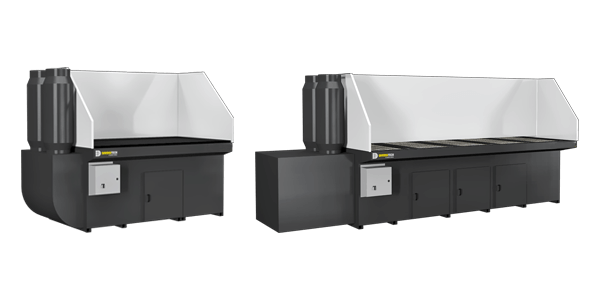
Installing high quality Downdraft Tables as part of your production process will provide workers with a safe environment to accomplish their work, while ensuring a high level of quality and performance to which you’ve grown accustomed.
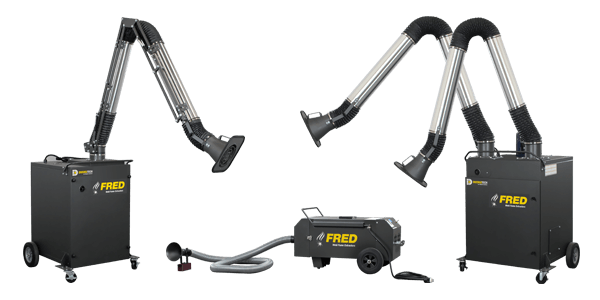
Diversitech, a global leader in air pollution solutions, offers a vast selection of Portable Fume Extractors for use with various industrial applications such as welding, soldering, painting and more. Discover our most popular products.
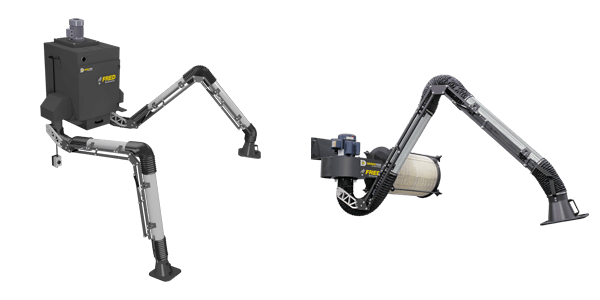
Wall-mounted Fume Extractors allow fabrication shops to cost effectively mount air cleaners on a wall, column or ceiling mount configuration, saving valuable floor space for employees and production equipment in confined floor space environments.
The type and severity of health conditions caused by exposure to welding fume depend directly on the type of metal being welded. Welding galvanized steel fumes, for example, can lead to metal fume fever. Characterized by flu-like symptoms such as fever, chills, weakness, fatigue, aches, nausea and metallic taste, metal fume fever usually lasts no more than a day.
Long term welding effects are far more serious conditions, especially with long-term exposure. Fumes from stainless steel welding often contain hexavalent chromium, a carcinogen recognized by the Occupational Safety & Health Administration (OSHA). Exposure to hexavalent chromium can lead to a number of serious conditions including lung and nasal cancers as well as liver and kidney failure.
Other carcinogenic metals that may be found in weld fume include nickel, beryllium, arsenic and cadmium. High levels of cadmium can be fatal, even after just initial exposure.
But cancer is just one of the conditions that can result from inhaling weld fume long-term. Workers also are at risk of developing:
Smoke from welding also releases a number of gases that pose an immediate threat to worker health. Helium, argon and carbon dioxide can displace oxygen in the room and lead to suffocation when welding in an enclosed area. Carbon monoxide may also form, putting welders at risk of asphyxiation
Welding also has the potential to generate combustible gases and dust particles. Whether or not the dusts produced are flammable depends directly on the type of metal being welded. Carbon steel and aluminum are two metals that can be highly explosive under certain conditions.
Welding fume control systems and wet dust collectors help neutralize these particles before they accumulate, preventing fires, protecting workers, and ensuring compliance with safety standards.
Failure to implement dust control measures or proper ventilation can lead to catastrophic outcomes for both workers and equipment.
The most efficient method to reduce exposure to hazardous fume generated during welding is through proper ventilation and source capture systems.
Capture-at-source ventilation such as portable fume extractors and downdraft tables draw the fumes in and away from the operators’ breathing zones to protect workers. Indoor air remains uncontaminated.
If capture-at-source is not feasible, employers can opt for an ambient air cleaning solution. These systems are often used when welders work in wide open spaces or on large pieces. Used alongside capture-at-source, ambient air filtration helps create an even cleaner air facility.
But purchasing effective ventilation equipment is only part of the equation. A number of factors go into the proper use of air filtration equipment, including:
Failure to implement the above recommendations may result in an ineffective capture of airborne contaminants.
When working on large assemblies or in open spaces, ambient air filtration systems support welding fume control by continuously cleaning the background air.
For best results, use both systems together.
Knowing how to prevent inhaling welding fumes starts with understanding your work environment and investing in the right safety systems.
The type of filtration equipment you choose depends on the materials worked on as well as your unique work situation. To properly asses your specific requirements, you’ll need to determine:
Installing high quality Downdraft Tables as part of your production process will provide workers with a safe environment to accomplish their work, while ensuring a high level of quality and performance to which you’ve grown accustomed.
Diversitech, a global leader in air pollution solutions, offers a vast selection of Portable Fume Extractors for use with various industrial applications such as welding, soldering, painting and more. Discover our most popular products.
Wall-mounted Fume Extractors allow fabrication shops to cost effectively mount air cleaners on a wall, column or ceiling mount configuration, saving valuable floor space for employees and production equipment in confined floor space environments.
Our Team is Happy to assist! Contact Diversitech today to get started
Please provide the information requested below so we can provide you with a timely and customized solution for your specific needs.